
Can Yoga Help With Anxiety? Here's What I Notice on the Mat
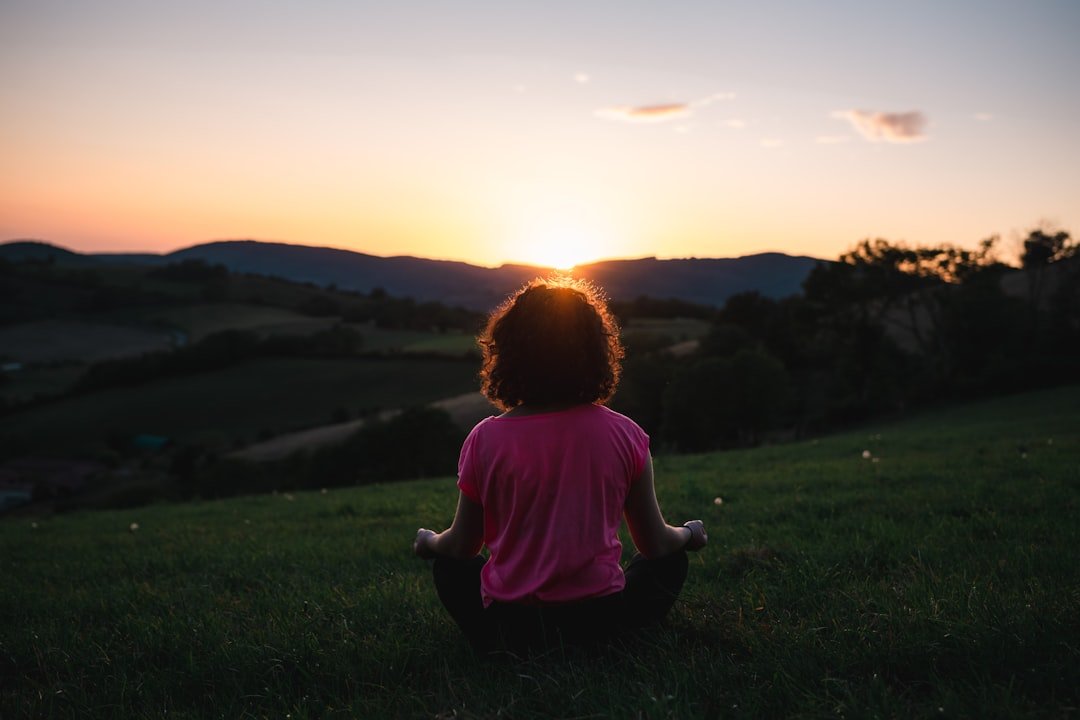
The first thing I noticed when I started teaching was how many people came to class already carrying something heavy. Not a story they'd share, just a kind of held-ness in the body. Shoulders drawn in. Jaw set. Breath barely reaching the belly.
Most of them hadn't named it anxiety. But the body tends to tell the truth whether you're paying attention to it or not.
That tension, that vigilance, that low-level hum of something's not quite right, it's extraordinarily common. And yoga genuinely does something with it. I want to be careful about how I say that though, because "yoga helps with anxiety" is both true and easily misread.
What Happens in the Body During Yoga
When anxiety is present, the nervous system is running in threat-detection mode. Heart rate is elevated, breathing is shallow and high in the chest, muscles stay slightly contracted, and the mind keeps scanning for what might go wrong next. This isn't a character flaw. It's a biological response doing its job, just running longer than it's supposed to.
Yoga interrupts this in a few concrete ways.
Movement that requires attention, following a sequence of poses, tracking where your knee is relative to your hip, noticing when your weight shifts, pulls your focus away from future-thinking and into the body now. That interruption of mental rumination is one of the first things people notice after a class. Not that the anxiety is gone, but that there has been a break in it.
Then there's what happens in muscle tissue. Sustained holds release physical tension that accumulates without notice. A lot of people don't realise how much they've been gripping until a long forward fold or a slow hip opener gives them somewhere to let it go.
The nervous system effects are more direct than most people expect. Yoga doesn't just feel calming. It asks the physiology to shift. Slow, deliberate movement combined with an extended exhale activates the parasympathetic nervous system, the branch responsible for rest and recovery. That's not a metaphor. It's the mechanism behind why you feel different at the end of a class than you did at the start.
The Breath Is Doing Most of the Work
You can separate the movement from the breathwork and still get significant results. The exhale is the key lever.
Most people, particularly those who carry a lot of stress, breathe in a way that keeps the nervous system slightly activated: short inhales, even shorter exhales, little involvement of the diaphragm. Yoga practice tends to correct this, partly through direct cueing and partly through the pace of the practice itself.
Poses that compress the front of the body, deep forward folds, child's pose, a slow seated twist, naturally lengthen the exhale and encourage fuller breathing. Over time, this retraining has carryover outside of class. People start noticing their breath in daily life and can use it deliberately when anxiety spikes.
If you want a guided place to start, Emma Ceolin's yoga for stress relief class is one of the clearest examples of this approach in action. It moves through breath and body in a way that doesn't feel clinical or prescriptive, just practical.
Which Style Is Worth Trying?
The honest answer: it depends on what your anxiety feels like in your body.
If it comes with restlessness and a physical charge you can't quite shake, starting with a more dynamic practice gives the body somewhere to put that energy. Flow-based classes can work well here. A lot of people find they access stillness more easily after they've moved through the physical component first.
If anxiety shows up as a wired, overthinking, can't-switch-off state, slower styles are usually more effective. Restorative classes, yin, gentle hatha, anything where you're held in a pose long enough that the body and mind have to catch up with each other. That prolonged stillness can feel uncomfortable at first, especially if moving faster is your default. But that discomfort is usually a signal you're in the right place.
For specific poses worth building into your practice, these five poses for anxiety are a practical starting point, particularly the floor-based ones that keep you grounded and encourage a slower breath pattern.
The mat you practice on makes more difference than it might seem. When the surface under you is stable, when your hands don't slip and your knees have enough cushioning for long holds, you stop managing the surface and start actually practising. Our mats are made for that kind of reliability, across every style from a slow restorative floor hold to a full dynamic flow.
What Yoga Can and Can't Do
Yoga is a support, not a solution. I think it's important to say this plainly.
If anxiety is significantly disrupting your daily life, yoga alone is unlikely to be enough. It works best as part of a wider picture, alongside other kinds of support: therapy, rest, community, medical care if that's what's needed. I wouldn't want anyone using it as a substitute for those things.
What I do think yoga offers is something genuinely useful: a tool you can use on your own, at any time, that builds body awareness over months and years of regular practice. You start to notice earlier when tension is accumulating. You have somewhere concrete to take it. You develop a felt sense of what it's like in your body when things are okay, which makes it easier to notice when they're not.
That ongoing literacy is worth building. And the mat is where most of it happens.

Comments