
Yoga During Pregnancy: What to Know Before You Roll Out Your Mat
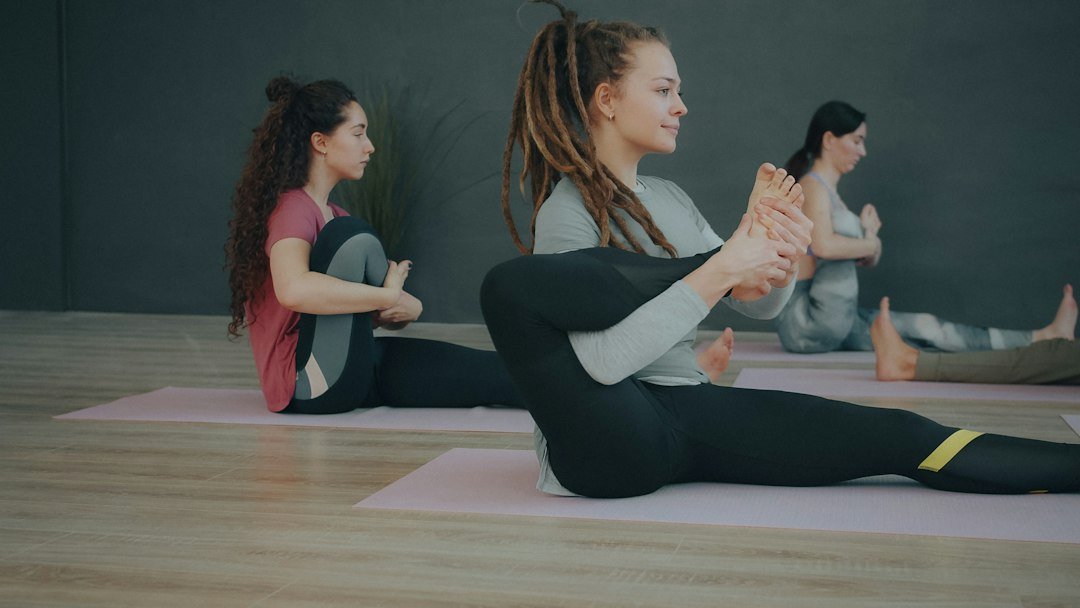
Yoga and pregnancy get talked about together all the time, and for good reason. Many women find that a gentle practice gives them a place to slow down, breathe and feel at home in a body that is changing week by week. What yoga cannot do is replace medical care, and it is not a treatment for anything. Think of it as a supportive habit, not a fix.
Here is what I tell students who ask me about practising while pregnant, drawn from years of teaching and from the women who have shared their practice with me.
Start with a conversation, not a pose
Before you roll out a mat, check in with your doctor or midwife. Every pregnancy is different, and what suits one person may not suit another. Ask whether gentle movement is appropriate for you right now, and whether there is anything specific to avoid. Get that answer first, then build your practice around it.
If you already practise, your teacher can help you adjust. If you are new to yoga, look for a prenatal class or a teacher with prenatal training. Tell any teacher you work with that you are pregnant and roughly how far along you are, every time. Your body shifts quickly, and so should the plan.
What a pregnancy-friendly practice tends to look like
Most prenatal sessions share a few themes. They are slower, they are spacious, and they leave plenty of room to stop. You are not chasing depth in a stretch or holding a pose until it burns. You are listening.
Make space for your belly. Poses that compress the abdomen, or deep twists that close the front body, are usually modified. Opening the knees wide in a seated or kneeling position gives your belly somewhere to go. If you want a familiar shape to explore, child's pose can be adapted with the knees wide apart and a bolster or folded blanket under your chest.
Use props generously. Blocks, bolsters, blankets and a wall are your friends. A block under your hand in a standing pose brings the floor closer. A folded blanket under your hips makes a seated position far more comfortable. Props are not a sign you are doing it wrong. They are how a good prenatal practice works.
Keep the breath easy. Slow, steady breathing is the thread through every session. If you notice yourself holding your breath or straining, back off. A calm, even breath is a better guide than any sequence on a page.
Skip the competitive edge. Pregnancy hormones change how the ligaments behave, which can make you feel more flexible than usual. That can tempt you to go further than your body is ready for. Aim for stability and ease instead of range.
Common things to be careful with
Your doctor or midwife and your prenatal teacher are the right people to give you a personal list, but a few general points come up again and again. Lying flat on your back for long periods is often changed as pregnancy progresses, with a wedge or bolster used to prop the upper body. Hot rooms are generally something to ask about before attending. Balance poses are often practised close to a wall or chair, since your centre of gravity moves as your belly grows.
Pay attention to how you feel on the day. Energy in pregnancy can swing from one morning to the next. Some days a full practice feels good. Other days, five minutes of breathing on a cushion is exactly right. Both count.
Setting up a space you will actually use
The easiest practice to keep is the one that is already set up. Choose a corner of your home with room to open your arms and legs, and keep your props nearby. If you are new to practising at home, this beginner's guide to home yoga covers how to make the space work for you.
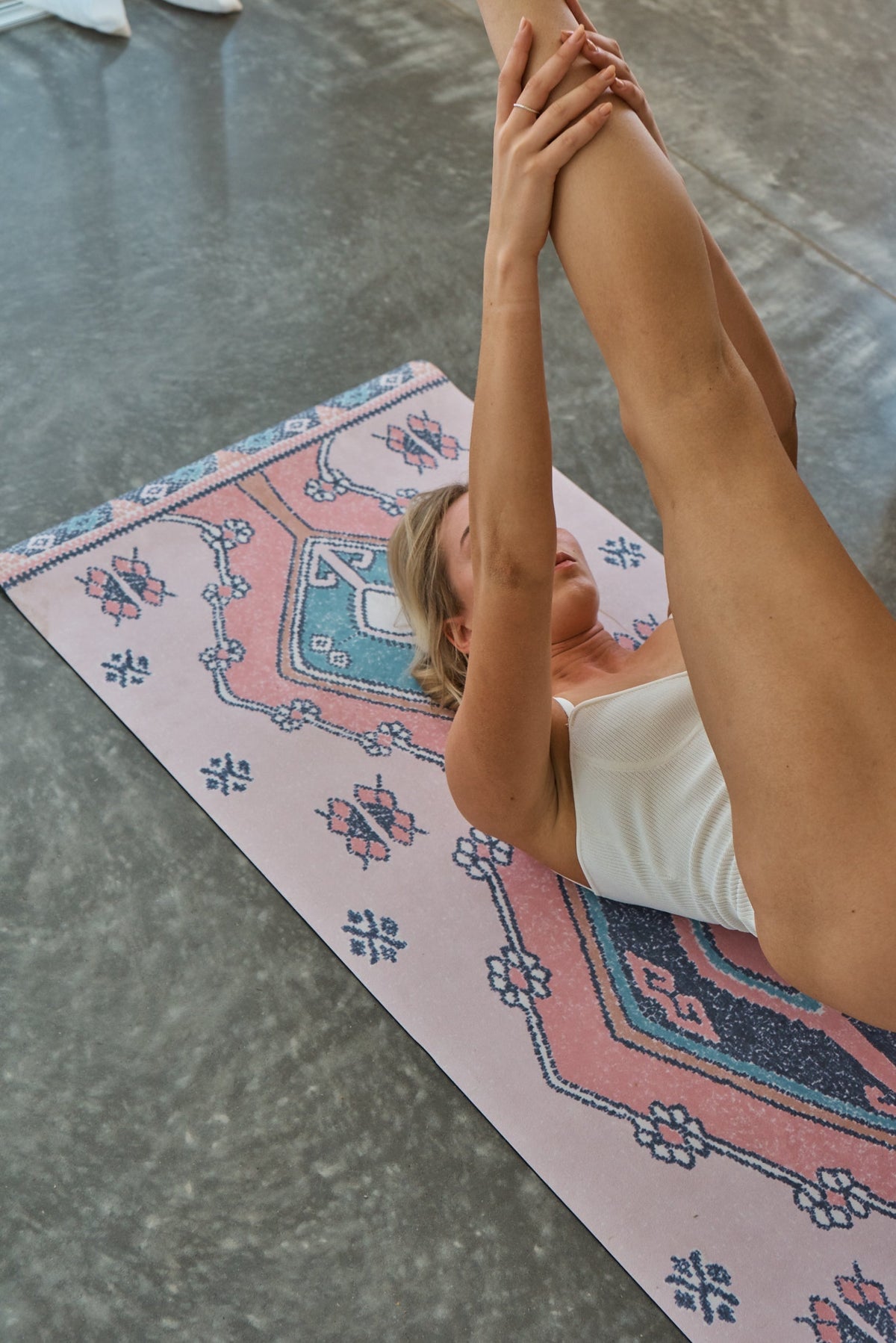
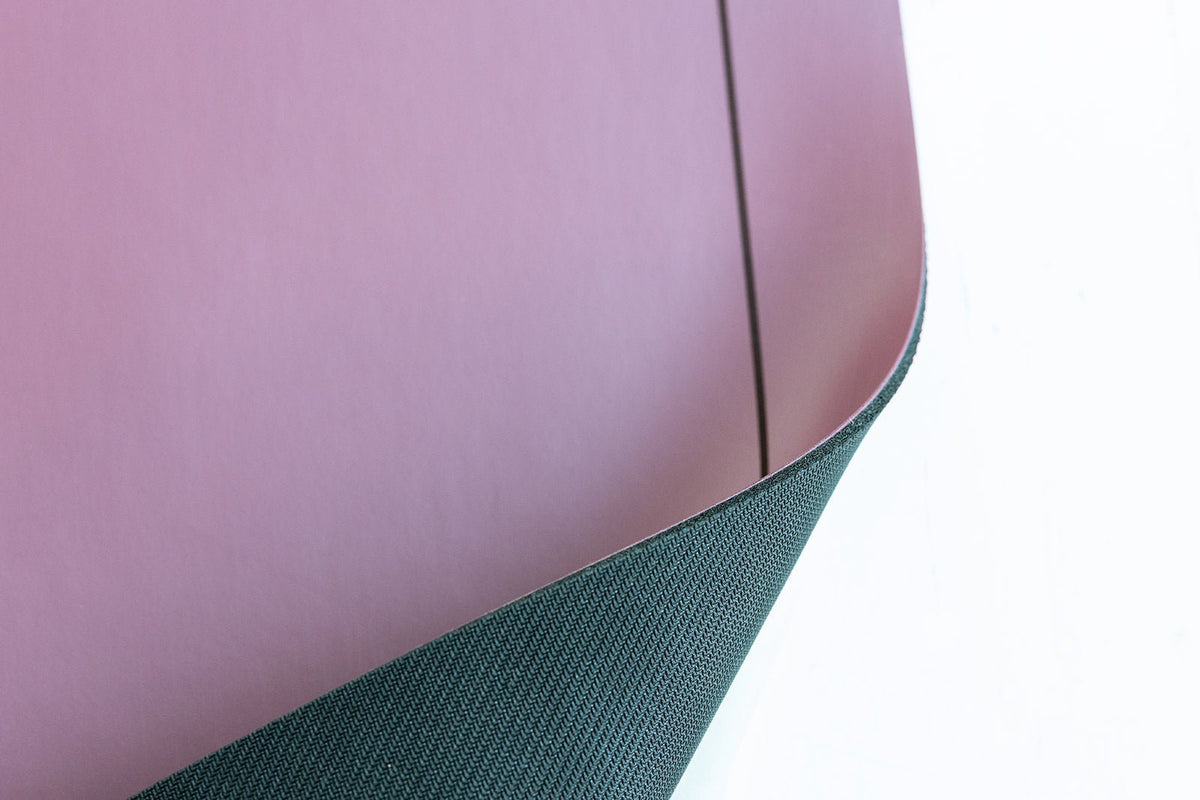
Your mat matters more than you might expect at this stage. You want a surface with reliable grip, so your hands and feet stay where you put them, and enough cushion to feel kind on your knees and hips when you kneel or sit. Natural rubber gives a grounded, non-slip feel, and a soft microsuede top is comfortable against the skin. Our mats are made with exactly that in mind, and they are designed to look good enough to leave out, which makes it far easier to step onto one when you have ten spare minutes.
A simple way to begin
If your doctor or midwife has given you the green light, try this short sequence on a quiet afternoon. Sit comfortably with your legs crossed or on a folded blanket and take ten slow breaths. Move to hands and knees and gently roll your spine through cat and cow at an easy pace. Settle into a wide-knee child's pose with a bolster under your chest and rest there for a few minutes. Finish lying on your side with a cushion between your knees and another under your head.
That is all it needs to be. Nothing in there asks you to push. It asks you to arrive, breathe and notice how you feel, and that is a very good place to practise from in the months before your baby arrives.

Comments