
The Yoga Mat That Lives in Your Living Room (Not Your Cupboard)
How choosing the right mat can quietly transform your home practice
There's a reason most home yoga practices don't last.
It's not motivation. It's not time. It's not even discipline. It's that your mat is rolled up in a cupboard somewhere, tucked behind the vacuum cleaner or stacked under a pile of gym bags. And every time you think about doing a quick practice, there's a small but very real moment of friction: you have to go and get it.
That moment is enough to talk most people out of it.
Here's the thing no one tells you when you buy a yoga mat: where your mat lives matters just as much as what it's made of.
Out of Sight, Out of Practice
Behavioural science has a name for this. "Friction" is the term researchers use to describe the small obstacles that sit between intention and action. The bigger the friction, the less likely you are to follow through — even when you genuinely want to.
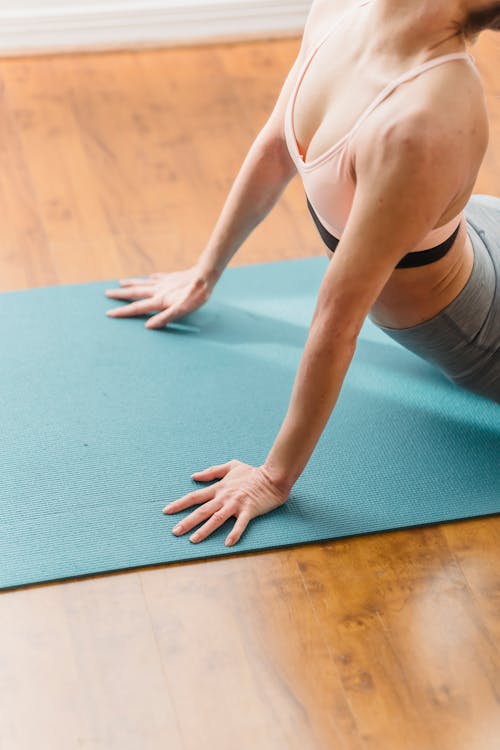
Apply that to your yoga practice. If your mat is already unrolled in the corner of your living room or bedroom, the barrier to stepping onto it is almost zero. You walk past it, you think "I've got five minutes," and you're in downward dog before you've had a chance to talk yourself out of it.
If it's in the cupboard, that same thought has to survive a detour: find the mat, unroll it, clear a space, and then start. For a lot of people — especially on tired evenings or rushed mornings — that detour wins.
The simplest thing you can do to build a consistent home practice is to leave your mat out.
The Problem With Most Mats
Which brings us to the obvious issue: most yoga mats are not designed to be looked at.
They're functional objects — grippy rubber, foam cushioning, the occasional alignment line. They come in block colours or basic patterns that look fine in a studio but feel out of place in a thoughtfully decorated living room. Leaving one out in your home isn't a design choice, it's a trade-off.
So most people roll them up. And most home yoga practices stay inconsistent.
What Makes a Mat Worth Displaying
A mat that earns a permanent spot on your floor is a different category of object. It sits at the intersection of function and design, and it asks more of itself than grip and cushion.
Here's what to look for:
Print quality that holds up. A mat you're going to see every day needs to look as good on day three hundred as it did on day one. That means high-resolution, fade-resistant printing on a surface that doesn't crack or peel with regular use.
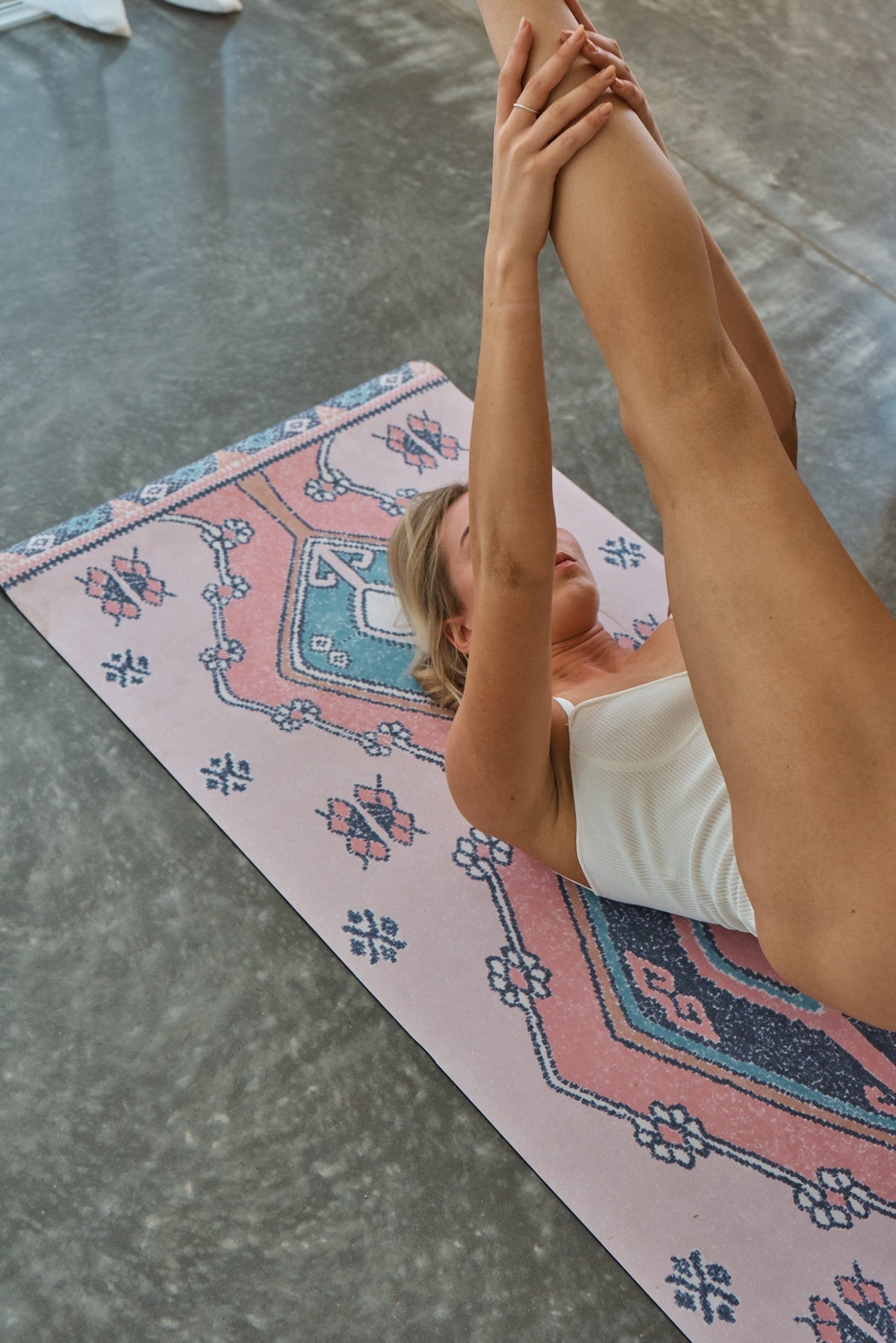
A design that suits your space. The best mats borrow from the same visual language as interior design — considered patterns, earthy tones, and artwork that feels intentional rather than sporty. Think of it less like athletic equipment and more like a textile you'd choose for your home.
Materials that age gracefully. Natural rubber, organic cotton, and other considered materials tend to look and feel better over time. They don't go sticky or develop that plasticky sheen that cheaper mats acquire after a few months.
Thickness that suits your practice. Whether you're moving through a dynamic flow, settling into long holds, or everything in between, a mat with meaningful cushioning protects your joints and makes the floor feel like somewhere you want to spend time.
A Mat for Every Practice
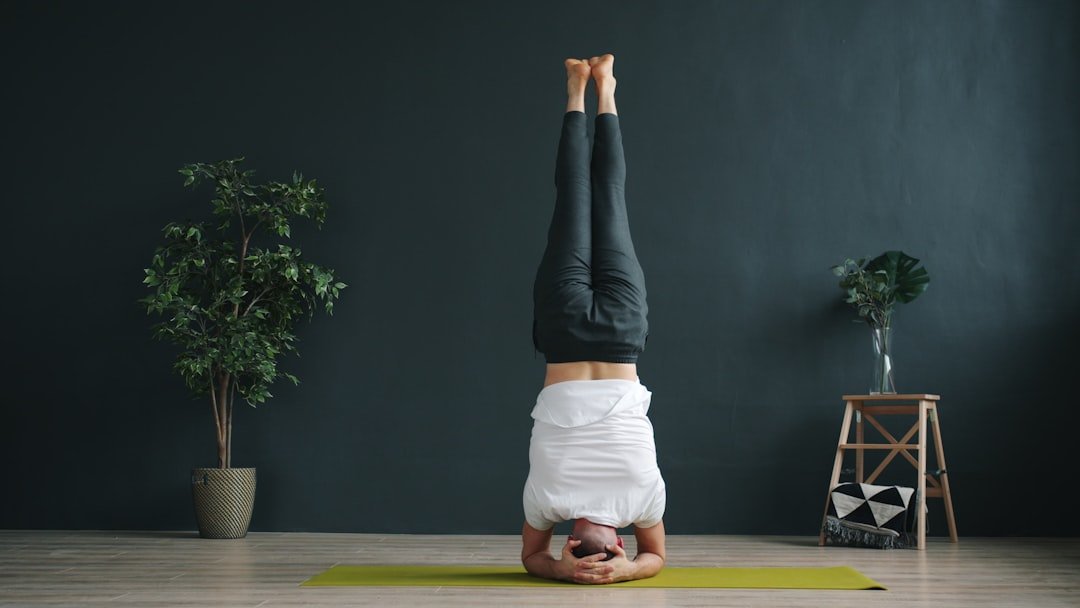
One of the great things about building a home practice around a mat you love is that it removes the self-consciousness of choosing the "right" style of yoga. The mat doesn't care whether you're flowing through sun salutations, moving slowly through floor-based work, or lying in savasana for longer than you planned.
A high-quality, well-designed mat serves all of it. The grip works across movement intensities. The cushioning supports stillness just as well as it supports strength. And because it's already out and waiting for you, whatever kind of practice you need on a given day is always just a step away.
The Ritual of the Visible Mat
There's something else that happens when your mat lives in your living space rather than in a cupboard. It becomes a quiet, daily reminder of who you're trying to be.
You walk past it in the morning and it asks you a small question. You see it after work and it offers you something. It becomes part of the texture of your home — not a piece of gym equipment you have to retrieve, but a standing invitation.
That shift is subtle, but it compounds. People who keep their mats out tend to practice more. Not because they're more disciplined, but because the decision to practice has already been half-made for them.
Choosing Differently
If your current mat is living in a cupboard, it might be time to ask whether you bought the right one.
A mat that's beautiful enough to leave out isn't a luxury. It's a practical choice in favour of consistency, and an investment in the kind of home practice that actually sticks.
Because the best yoga mat isn't the most technically impressive one. It's the one you actually use.
Explore our range of yoga mats designed to work as hard as they look — at home, in the studio, and everywhere in between.

Comments