
What Is Yoga? What Teachers Wish More People Knew
Most people come to yoga thinking it is about flexibility. You will touch your toes eventually, they say, if you just keep showing up. And sure, your hamstrings will probably thank you. But if that were all yoga was, it would not have stuck around for five thousand years.
Yoga is one of those things that is hard to explain until you have felt it in your body. The word itself comes from the Sanskrit root yuj, meaning to yoke or to unite. What you are uniting depends on who you ask: your mind and body, your breath and movement, your scattered thoughts and something quieter underneath them. In practice, all of those definitions end up being true at once.
Where Yoga Actually Comes From
Yoga originated in ancient India, with the earliest references appearing in the Rigveda, a collection of sacred texts dating back more than 3,000 years. It developed over centuries through the Indus Valley civilisation, and was later shaped by Hindu, Buddhist, and Jain traditions. The Yoga Sutras of Patanjali, written around 400 CE, remain one of the most studied texts in yoga philosophy. Patanjali described yoga as the stilling of the fluctuations of the mind. Five words in Sanskrit, and a lifetime of practice trying to get there.
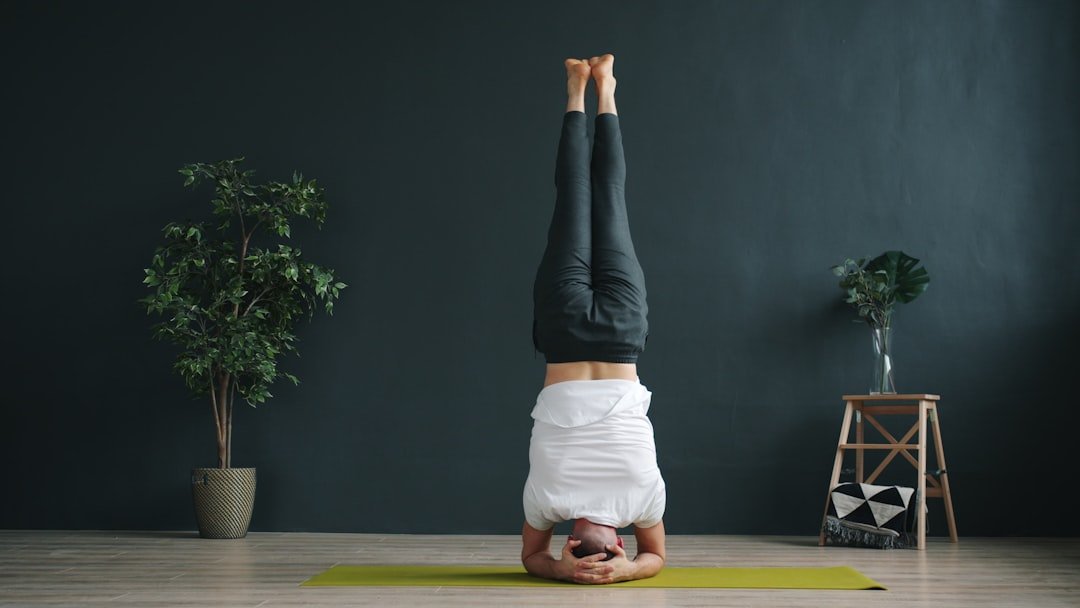
The physical poses most of us in the West call yoga, known as asana, are actually just one of eight limbs that Patanjali described. The others include breathwork (pranayama), ethical guidelines for how you treat yourself and others, sensory withdrawal, concentration, meditation, and states of deep absorption. The headstands you see on Instagram are one branch of a much bigger tree. Most people who practise for long enough find themselves drawn toward that wider picture over time.
What Actually Happens in a Yoga Class
That depends on the style, and the range is wider than most beginners expect.
A Vinyasa class will have you flowing through sequences of poses linked with breath, and you will likely work up a sweat. A Yin class asks you to hold passive shapes for three to five minutes at a time, targeting connective tissue and asking your nervous system to let go. Hatha tends to sit somewhere in the middle, individual poses held for a few breaths with attention to alignment. Restorative is closer to guided rest than to exercise.
What all these styles share is this: the breath is always the anchor. Your teacher will cue you to inhale as you lengthen, exhale as you fold. This is not decoration. The breath is what turns movement into yoga rather than just gymnastics. When your attention is on your breath, it is not running through your to-do list or replaying last week's difficult conversation. That gap, that quiet, is the practice.
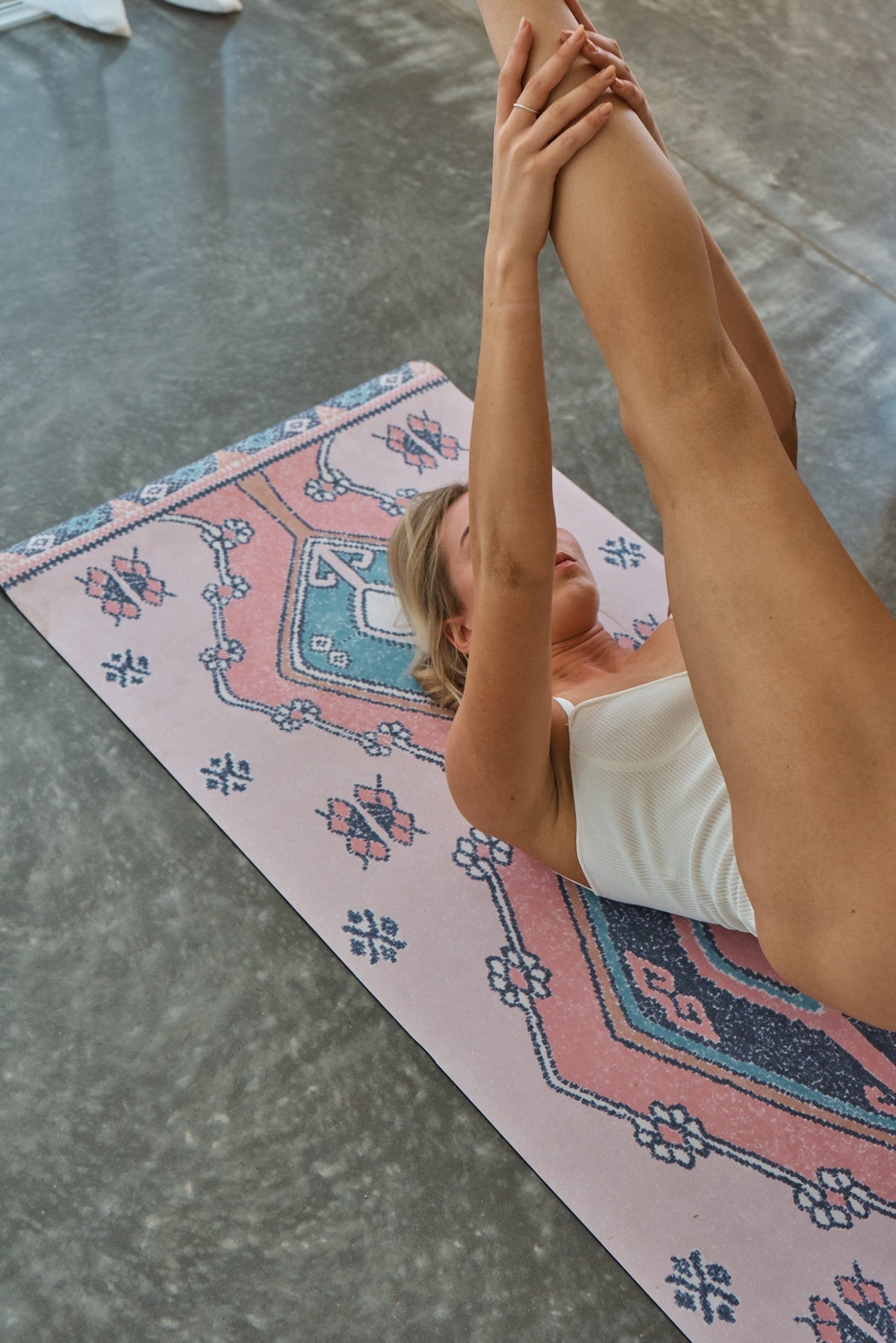
Having a mat that works with your body helps more than you might expect. When you are not slipping or repositioning mid-pose, you can stay in your body rather than fighting your gear. Our mats are made for exactly this, whether you are easing into a long Yin hold or moving through a faster flow.
Do You Need to Be Flexible Before You Start?
No. This comes up in almost every beginner conversation, and the answer is always the same. You do not need to be flexible to do yoga any more than you need to be strong before starting at the gym. Yoga is where you develop those things, not a requirement for showing up.
Students who arrive stiff often become the most attentive practitioners. Because they cannot muscle through a pose, they learn to pay close attention to their bodies. That attention, that quality of noticing, is exactly what yoga is trying to teach.
What yoga does ask for is a willingness to be a beginner. The learning curve is less about physical ability and more about learning to stay present. You will wobble. You will lose your balance. You will catch yourself planning dinner during savasana. None of that means you are doing it wrong. It means you are human, and yoga is for humans.
What Yoga Is Not
Yoga is not a religion, though it has spiritual roots that are worth understanding if you practise seriously. You do not need to adopt any particular belief system to show up on a mat and benefit from it.
It is not a performance, and the person beside you in class with the perfect backbend is not the standard you are measuring against. Their body has its own history, its own opening points and tight spots. So does yours.
It is not only for women, or for people with a certain kind of body, or for those who can already sit cross-legged on the floor. Yoga adapts. There are chair-based versions, wall-supported variations, and sequences practised entirely lying down. The pose is a container, and the container comes in many shapes.
If you have been curious for a while but keep putting it off, the next step is simpler than it might feel. Find a beginner class, roll out a mat, and show up without expectations. The practice will meet you where you are.
Photo by Vitaly Gariev on Unsplash

Comments