
The Yoga Poses That Help You Sleep Better (And Why They Work)
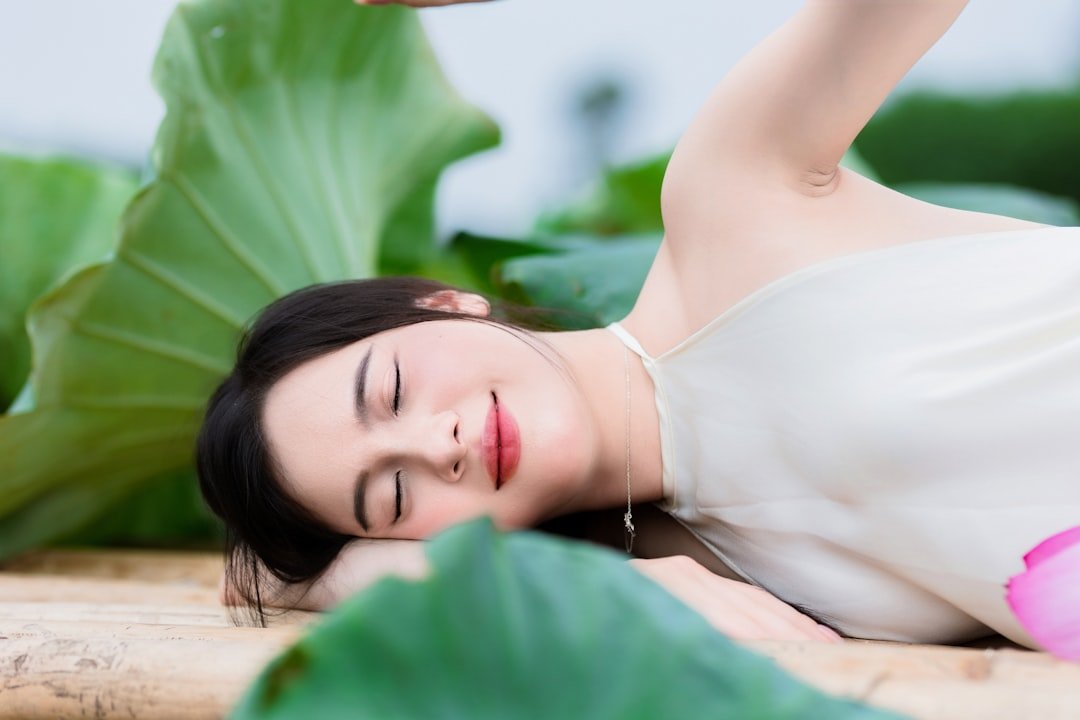
The gap between lying down and actually falling asleep is where a lot of us struggle. Your body is tired, your mind isn't ready to let go, and you end up staring at the ceiling replaying your to-do list or rehearsing conversations that haven't happened yet. Yoga can help with that. Not because it's magic, but because specific poses do something concrete: they activate the parasympathetic nervous system and slow the mental traffic that keeps you wired when you need to be winding down.
These are the poses I come back to again and again, both in my own evening practice and in classes I teach. Some are active, some are completely passive. All of them work best on a surface that's comfortable enough to sink into without distraction — when you're holding a single position for two or three minutes, the quality of what's underneath you matters.
What's actually happening when yoga helps you sleep
Most of us spend our days in some degree of sympathetic activation. Work, screens, noise, obligations — the nervous system responds to all of it by staying alert. When you get into bed, that alertness doesn't switch off automatically just because you want it to.
A slow, floor-based yoga practice works because certain shapes and breathing patterns signal safety to the nervous system. Poses that bring your head below your heart, that invite long exhalations, and that release stored tension in the hips and lower back all contribute to that shift. Heart rate slows. The mental chatter gets quieter. Sleep becomes possible.
This same principle is behind the poses we use for anxiety. If you've ever tried yoga poses for anxiety, you'll notice a lot of overlap with a sleep practice — the nervous system response is similar, and many of the same shapes apply.
You don't need to do all of the poses below every night. A 15 to 20 minute sequence of three or four is more than enough. I usually do mine on my bedroom floor, on my mat, in low light. No music. No phone. Just movement and breath.
The poses that make a real difference
Legs up the wall (Viparita Karani)
This one is consistently underestimated. You lie on your back and rest your legs up a wall, with your hips as close to the baseboard as is comfortable. The legs can be together or slightly apart, and your arms rest open at your sides. Stay for three to five minutes and breathe slowly.
The gentle inversion encourages venous return and signals the nervous system to downregulate. It's also one of those poses that reveals how much tension you've been carrying without realising it. By minute two, you'll feel your legs getting heavy and your jaw unclenching.
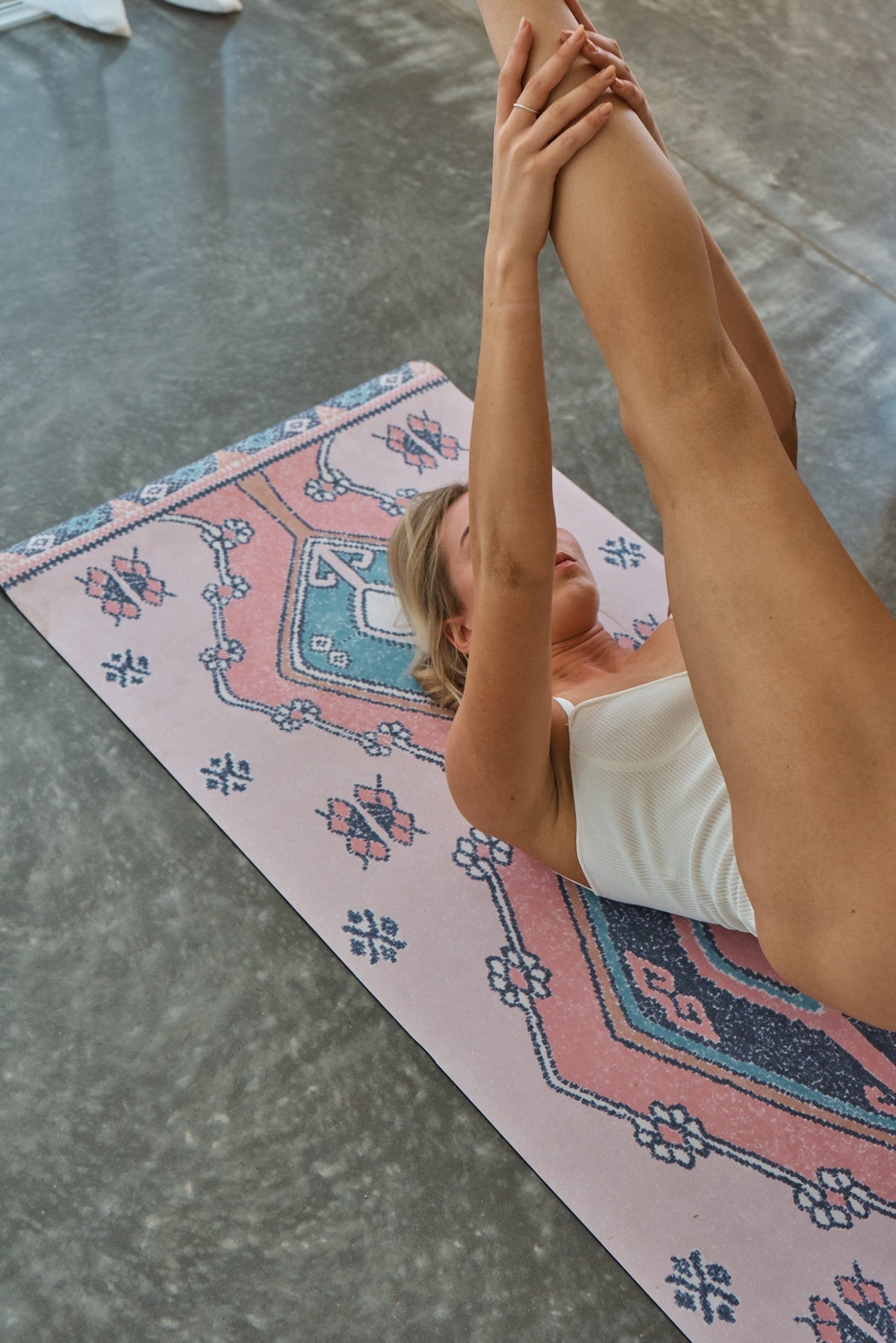
Supine spinal twist (Supta Matsyendrasana)
Lie on your back, draw one knee into your chest, then guide it across your body while keeping both shoulders on the floor. Look in the opposite direction from your knee. Hold for two to three minutes, then switch sides.
Twists gently wring tension from the lumbar spine and compress and release the side body. This is one I especially recommend to anyone who sits at a desk all day — the lower back tends to carry far more than it should, and this pose addresses that directly.
Reclined bound angle (Supta Baddha Konasana)
Lie on your back and bring the soles of your feet together, letting your knees fall open to the sides. If this feels sharp in the hips, support your knees with blankets or rolled-up towels. Rest one hand on your belly, one on your chest. Close your eyes and breathe.
This pose opens the hips and groins without any muscular effort. There's nothing to engage, nothing to hold. That passivity is exactly the point. Your job is just to stay still for three to five minutes and let the breath do the work.
Standing forward fold (Uttanasana)
Stand with your feet hip-width apart, soften your knees generously, and fold forward from the hips. Let the head hang completely heavy. You can hold opposite elbows, or let the arms hang free. Stay for a full minute.
The head-below-heart position, combined with the release of the neck and shoulders, has a noticeable calming effect. I often suggest this one as part of a bedtime routine you can do in the bathroom after brushing your teeth — you don't need your mat, just a few feet of floor space. Consistency is what makes these practices stick, and this pose is easy to slot in.
Child's pose (Balasana)
Kneel and fold forward, resting your forehead on your mat with your arms either stretched forward or resting alongside your body. This is one of the most familiar shapes in yoga, and that familiarity helps — the body relaxes into what it recognises.
While you're here, try extending your exhales. Breathe in for four counts, breathe out for six or eight. That lengthened exhale is one of the most effective things you can do to shift the nervous system toward rest. If you want to build a fuller practice around this idea, the sequence in yoga to calm a busy mind is a good place to start.
How you finish matters as much as what you do
Whatever sequence you choose, end in savasana. Lie flat on your back, arms slightly away from your body, palms facing up, eyes closed. Stay for at least five minutes. This isn't optional — it's where the nervous system has a chance to integrate the practice, and where most of the calming actually happens.
If your mind wanders during savasana, that's completely normal. The goal isn't a blank mind. It's a slower one. Thoughts will come; you're just not following them anywhere.
A comfortable mat makes a genuine difference in an evening practice. During a dynamic morning flow, grip and performance take priority. At night, you want something supportive enough to buffer the floor and smooth enough to lie on for extended holds without any discomfort creeping in. Our mats are designed to work across both ends of that spectrum — whether you're moving through a full vinyasa or spending ten minutes in reclined bound angle before bed.
Consistency is what makes this work. One night of pre-sleep yoga won't reset years of lying awake. But three or four nights a week, over a few weeks, and most people notice a genuine shift. The body learns what the cues mean. The routine becomes the signal. And eventually, unrolling your mat in the evening starts to feel like permission to slow down.

Comments