
What Yoga Poses Help With Sleep? Six to Try Tonight
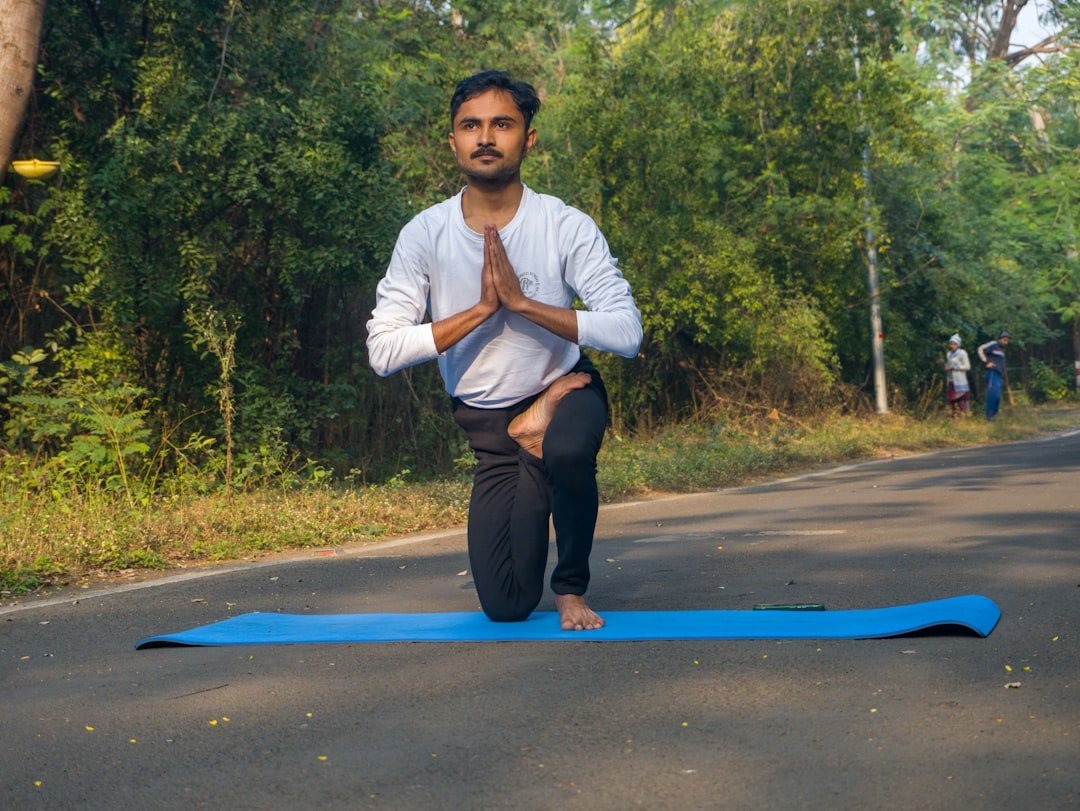
If you've ever lain awake at midnight replaying your to-do list, you already know the problem: the body might be horizontal, but the mind hasn't caught up. A short yoga practice before bed is one of the most reliable ways to bridge that gap.
These aren't the flowing sequences you'd do to warm up in the morning. The poses below are slow, held, and mostly on the floor. They work by activating the parasympathetic nervous system, the part of your body responsible for rest and digestion, and by drawing your attention inward and away from whatever's been swirling around in your head all day.
Why Yoga Works for Sleep
Most of us carry tension in our bodies without realising it. Tight hips from sitting, shoulders braced from screen time, a jaw that's been quietly clenching since 3pm. When you hold a pose for a few breaths and really pay attention to what's happening in your body, that stored tension starts to release.
The breathing matters too. Slow, deliberate exhales activate the vagus nerve, which runs through the core of the body and plays a central role in regulating stress. A few minutes of conscious breathing can shift you out of a low-grade stress response even on a difficult day.
If you've ever wondered how yoga helps with stress relief more broadly, the mechanisms are similar. The difference with a bedtime practice is that you're deliberately cueing your body toward sleep rather than toward a more general sense of calm.
Six Poses Worth Adding to Your Bedtime Routine
You don't need all six every night. Pick three or four that feel good for your body and stay with them for a week or two before changing anything up.
Child's Pose (Balasana)
This is often the first pose I recommend to anyone starting a wind-down practice. From a kneeling position, fold your torso over your thighs and extend your arms forward or rest them alongside your body. Let your forehead land on the mat. The pressure on the forehead is naturally calming for the nervous system. Hold for at least a minute, breathing slowly into the back of your ribcage. If your hips don't reach your heels comfortably, place a folded blanket between your thighs and calves.
Legs Up the Wall (Viparita Karani)
Lie on your back with your legs resting up against a wall. Your hips can be close to the wall or a little further away, whatever feels comfortable. This is a gentle inversion that helps drain fluid from the legs and encourages the body's rest response. Stay here for three to five minutes. If your lower back feels uncomfortable, place a folded blanket under your hips. This is one of those poses that sounds almost too simple to matter until you actually do it regularly.
Supine Spinal Twist (Supta Matsyendrasana)
Lie on your back, draw one knee to your chest, and let it fall across your body while you extend both arms out to either side. Turn your head in the opposite direction from your knee. This gently releases tension in the lower back, hips, and outer glutes. Hold for a minute or two on each side. The key is to let gravity do the work. You're not trying to force anything.
Reclining Bound Angle (Supta Baddha Konasana)
Lie on your back and bring the soles of your feet together, letting your knees fall out to either side. Place one hand on your belly and one on your chest. This opens the hips and inner thighs in a completely passive way, and it's a great pose for noticing your breath. If the stretch is too intense for your hips or groin, support each knee with a folded blanket or a cushion. Stay for two to three minutes.
Seated Forward Fold (Paschimottanasana)
Sit on the floor with your legs extended in front of you. Hinge forward from the hips and reach for your feet, shins, or wherever your hands land without rounding your spine aggressively. The goal here isn't a deep stretch. It's a gentle settling inward. Let your head hang, soften your jaw, and breathe slowly. This pose helps quiet mental activity and draws your focus away from the day. If your hamstrings are tight, bend your knees a little or sit on a folded blanket to tilt your pelvis forward.
Corpse Pose (Savasana)
This is the pose people most often want to skip, and it's the most important one. Lie flat on your back with your arms slightly away from your body, palms facing up. Close your eyes. Do nothing. Stay for at least five minutes, ideally ten. The intention is to be awake but completely still, allowing your body and mind to settle after the practice. In a bedtime context, some people drift off during Savasana entirely, which is fine. You can do this pose in bed if you prefer.
How to Build This Into Your Evening
The best time to practice is about an hour before you want to be asleep, not right as you're collapsing into bed. Give yourself enough time to come down from the day first. Dim the lights if you can, put your phone in another room, and spend fifteen to twenty minutes on the floor.
You'll probably notice a difference within a few nights, especially if you're consistent. The body picks up on repeated signals. A regular pre-sleep sequence starts to act as a cue, and by the time you're into your second or third pose, your nervous system is already preparing for rest.
If you're new to floor-based practices, this post on yoga poses for anxiety covers some of the same restorative territory and is worth reading alongside this one.
Your Mat Makes a Difference Here
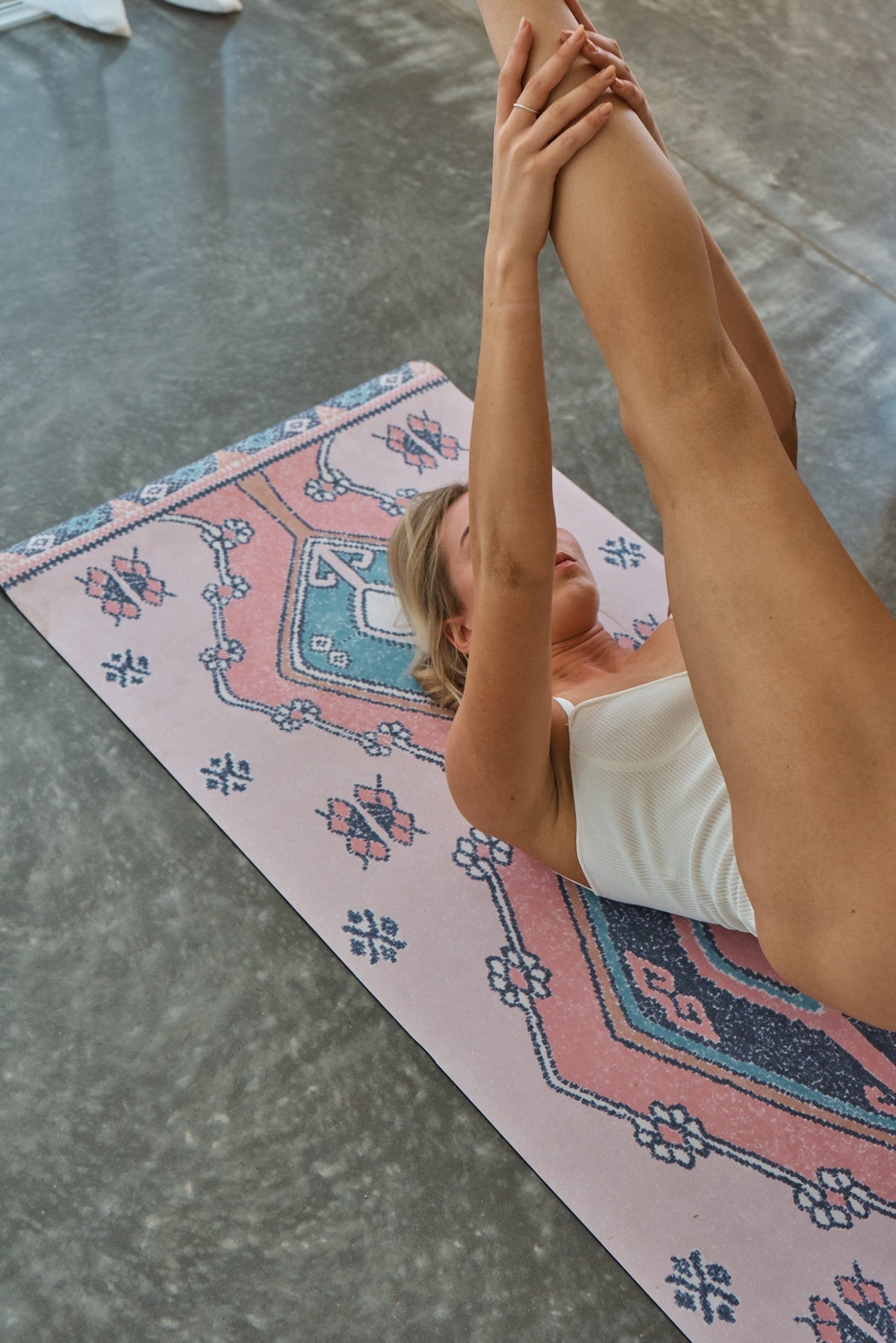
For a sleep-focused practice, you want a mat with real cushioning. These are floor poses, many held for several minutes, and if you can feel the hardness of the ground through your mat, you'll spend the whole time thinking about your hip bone rather than your breath.
Our mats are built with exactly this kind of practice in mind: supportive enough for long-held floor poses, grippy enough that you don't slide around when you shift positions, and made from natural materials so there's nothing off-gassing under your face while you're trying to relax. A good mat isn't a luxury for this kind of practice. It's part of what lets you actually let go.
Try adding just two or three of these poses tonight and notice how you feel in the morning. Sleep is one of the most underrated parts of a consistent yoga practice, and sometimes the mat is the best place to begin.

Comments