
Why Does My Yoga Mat Keep Slipping? (And How to Fix It)
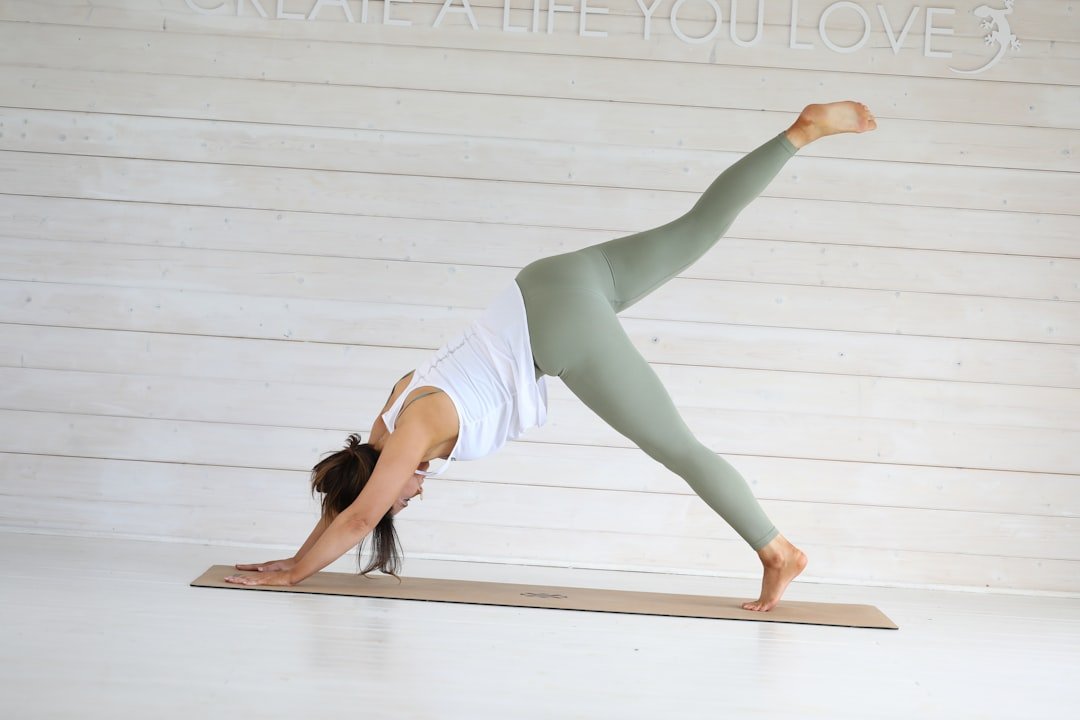
There is a particular kind of frustration that arrives the moment your hands slide forward in Downward Dog and the pose folds before you have even settled into it. You catch yourself, reset, and it happens again. You are not weak and you are not doing it wrong. The mat underneath you is the problem, and a slipping mat is almost always fixable once you understand what is actually causing it.
After years of teaching, I have watched countless students blame their own balance when the real culprit was sitting right under their palms. So before you give up on a pose, let me walk you through why grip disappears and how to bring it back.
Your new mat might still have its factory coating
Most new mats, particularly those made from natural rubber or polyurethane, arrive with a fine manufacturing film on the surface. It is a residue left over from production, and it sits like an invisible layer between your skin and the grip the mat is genuinely capable of. This is the single most common reason a fresh mat feels strangely slick, and it catches almost everyone off guard.
The fix is simple and a little satisfying. Wipe the whole surface down with a damp cloth and a small amount of mild soap, then let it air dry completely before you roll it up. You may need to repeat this a few times across your first week or two of practice. With each clean and each session, the film lifts and the true texture of the mat comes through. If you want a proper routine for this, I have written more about caring for your yoga mat so it stays grippy for the long haul.
Sweat and oils change the equation
Once you start moving, your body adds moisture, and moisture behaves very differently depending on what your mat is made from. Some mats grip better when they are slightly damp, which is why natural rubber and cork are loved by people who run hot. Others turn into a skating rink at the first sign of sweat, especially smooth synthetic surfaces that have nowhere for the moisture to go.
Your hands and feet matter here too. Hand cream, foot balm, even the natural oils your skin produces will all reduce grip. If you have moisturised in the last hour, that softness on your palms is working against you. For sweaty practice, a clean cotton towel or a dedicated grip towel laid over the top of the mat gives your hands and feet something reliable to press into. The wetter the towel gets, the more it actually grips, which feels counterintuitive until you try it.
Dust, residue and the floor beneath you
Grip dulls over time, and usually it is just a quiet build-up of dust, skin and product residue sitting on the surface. A mat that has not been cleaned in a month will feel noticeably slipperier than one wiped down every few sessions, even if it looks perfectly fine to the eye. Regular cleaning is the least glamorous and most effective thing you can do for your grip.
It is also worth working out which kind of slipping you are dealing with. There are two different problems that feel the same in the moment. Either your hands are sliding across the mat, or the whole mat is sliding across the floor. If it is the second one, the surface underneath is the issue. Smooth hardwood and tiles let a mat travel, and a thin or lightweight mat travels more. Practising on a flat, clean floor rather than a rug or carpet gives the underside of the mat something to hold, and a mat with real weight to it tends to stay put on its own.
Sometimes the mat itself simply will not grip
Here is the blunt truth. You can clean a mat religiously, manage your sweat, dry your hands, and some mats will still slide, because grip is a property of the material and you cannot add it after the fact. Thin, cheap PVC mats and well-worn mats that have lost their texture fall into this category. If the surface has gone shiny and smooth in the spots where your hands and feet land most, that mat has given what it had to give.
When you are choosing something that will actually hold you, the material is what to look at first. Natural rubber and cork both offer the kind of grip that holds steady through a sweaty, dynamic flow as readily as a slow, grounded session, and they do it without the chemical smell that comes off a lot of synthetic mats. If you want to go deeper on what separates a mat you can trust from one you cannot, this guide on the qualities to look for in a high-quality yoga mat is a good place to start.
Thickness plays a quieter role too. A very thick, soft mat can feel unstable in balancing poses because the cushioning shifts under you, which reads as slipping even when the surface is gripping fine. Matching the mat to the way you practise makes more difference than most people expect.
If you have worked through all of this and your mat is still letting you down, it is probably time for one that grips properly from the start. Our mats are made from natural rubber for exactly this reason, so your hands stay where you put them and you can stop thinking about the floor and start thinking about the pose. That, after all, is the whole point of stepping onto the mat in the first place.


Comments