
Yoga for Runners: The Poses That Actually Help
Ask any runner what their body feels like after a long week of kilometres and you'll hear the same list: tight hips, cranky hamstrings, a lower back that complains on the stairs. I see it constantly in my classes. Runners show up stiff through the same handful of places, because running is a repetitive motion in a single plane. It builds strength in one direction and leaves everything else undertrained.
The trouble with running in a straight line
Running moves you forward. It doesn't ask your hips to rotate, your spine to twist, or your ankles to work sideways. Over months and years, that adds up. The muscles you use get strong and short. The muscles you don't use get weak and tight from disuse. This is why so many runners deal with the same complaints: tight calves, sore IT bands, hip flexors that feel locked, and a lower back that tightens up to compensate for hips that won't open. If lower back pain is a familiar visitor after your long runs, this is usually why.
Yoga works in the opposite direction. It asks your body to move through ranges running never touches, and it holds you there long enough for tissue to actually change. That combination, movement variety plus time under stretch, is what running alone can't give you. None of this requires giving up your training plan or swapping running for something else. It sits alongside it, on the days you'd otherwise spend on the couch icing your knees.
Where to start if you've never rolled out a mat
You don't need ninety minutes and a chanting playlist. Twenty minutes, twice a week, aimed at the areas running hammers hardest will do more for you than an occasional hour-long class you dread. Hips, hamstrings, calves, and the muscles around the spine are the priority list.
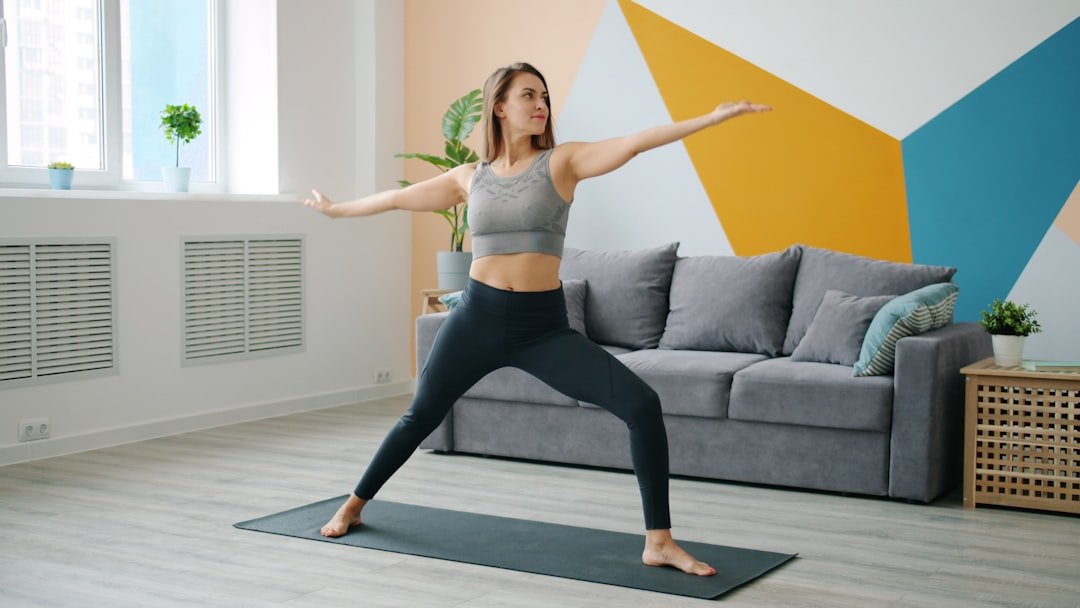
Triangle pose is one of the best places to begin. It lengthens the hamstrings and the side body at the same time, and it teaches your hips to open in a way a forward stride never will. I walk students through the full shape in this breakdown of trikonasana, and it's worth practising slowly rather than rushing to the final position.
Low lunges with the back knee down are another staple. They get into the hip flexors directly, which is where a lot of runners carry tension without realising it. Hold each side for a slow count of ten breaths rather than a quick five seconds. Tissue needs time, not intensity, to release.
A reclined figure-four stretch, lying on your back with one ankle crossed over the opposite knee, targets the glutes and the outer hip. It looks unremarkable and does an enormous amount of work. Runners who add this one move after every run tend to notice their stride start to feel looser within a couple of weeks.
Don't skip the calves and ankles. A simple downward dog, pedalling the feet one at a time to work each calf, reaches tissue that most runners never think to stretch directly. Tight calves are often the quiet cause of shin soreness, so a minute or two here goes a long way.
Timing matters more than people assume
Doing a few dynamic stretches before a run, gentle leg swings, walking lunges, hip circles, wakes the joints up without asking much of them. Save the longer, deeper holds for afterward, once your muscles are warm and actually willing to lengthen. Stretching cold tissue hard, right before you head out the door, works against you more than it helps.
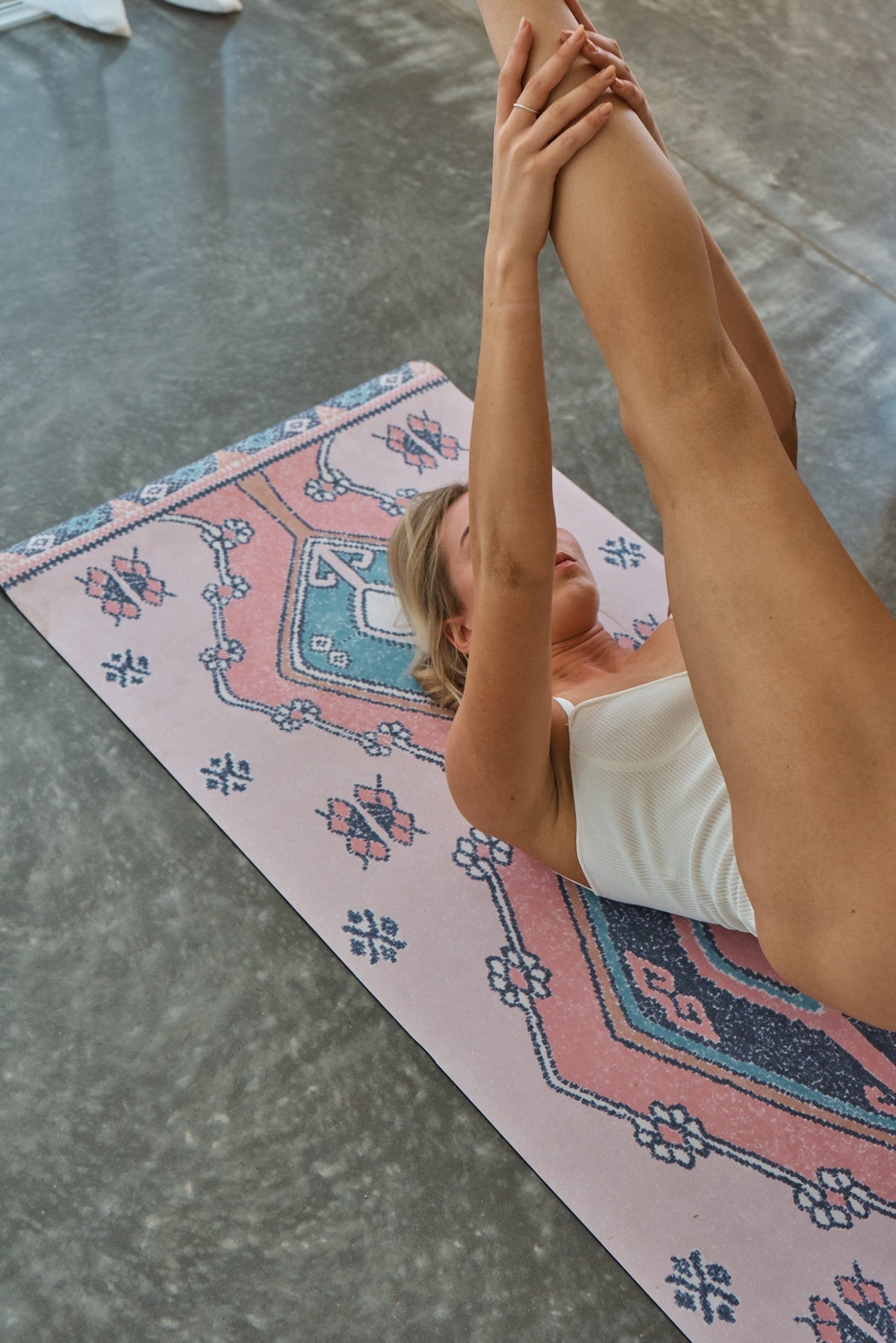
On rest days, a slower practice that spends real time in each shape gives your body a chance to recover in a way that passive sitting on the couch doesn't. This is where a dedicated mat earns its keep. You want something with enough cushioning to kneel and hold shapes comfortably, and enough grip that a sweaty forward fold doesn't turn into a slide. Our mats are built with exactly that kind of daily use in mind, whether you're doing a five minute cooldown or a full recovery session.
Breathing while you hold a stretch
Runners are used to breathing hard and fast. Yoga asks for the opposite: slow, even breath through the nose while a muscle is under tension. That shift matters more than it sounds. A long, steady exhale signals to the nervous system that it's safe to soften, and tight tissue releases far more readily when the breath is calm than when it's held or rushed. Next time you're in a hip stretch counting down the seconds, try lengthening your exhale instead. You'll usually feel the stretch deepen on its own, without forcing anything.
Consistency over ambition
I'd rather see a runner do ten minutes of hip and hamstring work every single day than a single hour-long class once a month. The body responds to repetition. Pick three or four shapes, keep them simple, and do them enough times that they become as automatic as lacing up your shoes. That's when you'll actually feel the difference, not in your flexibility scores, but in how your knees feel on mile eight and how quickly your legs bounce back the next morning.
Running gave you the engine. A little time on the mat each week is what keeps the rest of the machine from wearing down around it.

Comments