
The Best Yoga Mats for Travel: What Actually Makes a Mat Portable
I used to travel with my regular mat, the thick, cushy one I use at home, until I did the maths on a two week trip: four flights, three train transfers, and one mat that took up half my carry-on. I switched the next trip and never went back. If you practise on the road even a few times a year, the mat that works at home probably isn't the one you should be packing.
Weight is the first filter
A standard yoga mat can weigh anywhere from 900 grams to over two kilograms, and that difference is entirely felt once you're carrying it through an airport with a backpack, a laptop bag, and everything else you own for the week. Travel mats generally sit under a kilogram, some closer to 500 grams, made possible by thinner, denser materials rather than the plush foam you might use in your living room. You give up a little cushioning. You gain the ability to actually bring the thing with you.
Before you buy anything marketed as "travel friendly", check the actual weight in grams rather than trusting the word on the label. Some mats sold as portable are only marginally lighter than a standard mat, and that gap only shows up once you're the one carrying it up three flights of stairs to a guesthouse with no lift.
Thin isn't the same as flimsy
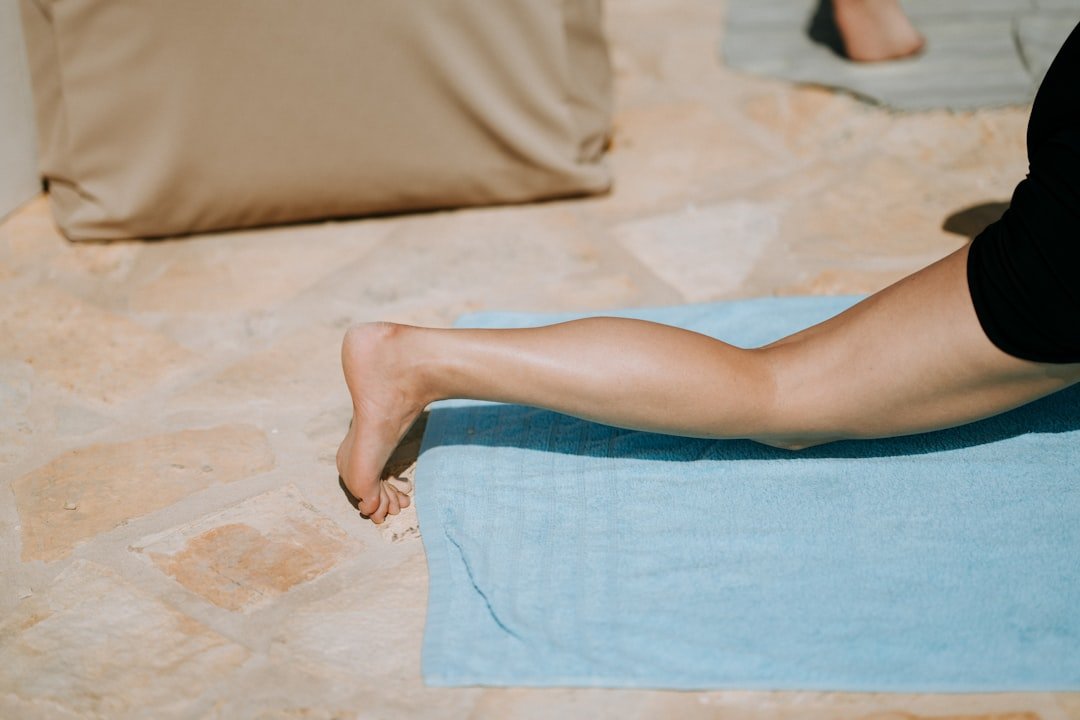
Most travel mats sit between 1mm and 2mm thick, compared to the 4mm to 6mm you'd expect from a mat you use at home. That thinness is what lets them roll down small enough to fit in a suitcase side pocket, but it also means you'll feel the floor underneath you more directly, especially in kneeling poses. If you practise on carpet or a soft studio floor, this barely registers. If you're on concrete, hardwood, or an outdoor deck, bring a folded towel or a light blanket for the parts of your practice where your knees take weight.
The trade-off is worth naming honestly. A travel mat isn't a replacement for the one you use every day. It's a different tool for a different context, one where portability wins over plushness because the alternative is not practising at all.
Grip doesn't disappear just because the mat gets lighter
The biggest mistake I see people make when buying a travel mat is assuming lighter automatically means more slippery. It doesn't, but you do need to check what the surface is made from. Natural rubber and cork travel mats tend to hold their grip even at low thickness, while some ultra-thin polyester options lose traction fast, particularly once you start to sweat. If you're heading somewhere hot or humid, prioritise the surface material over the pack size.
This matters more when you're away from your usual studio, where you don't know the floor, the room temperature, or how hard the class is going to push you. Keeping a mat properly clean also plays a bigger role in grip than most people realise. A mat that's picked up dust, sunscreen, or salt from a beach trip will feel slicker underfoot than a fresh one, travel mat or not, so a quick wipe down before you roll it up again is worth the extra minute.
What to pack alongside it
A lightweight strap and a compact towel take up almost no extra space and solve most of the problems a thin mat creates. The strap gives you the reach you'd otherwise get from cushioning and stability at home, and the towel handles both extra grip and the practical reality of practising somewhere you can't just towel off and leave your things drying. Neither is essential, but both make a travel mat feel a lot closer to your regular setup.
How you roll it matters too. Rolling too tight, especially with a rubber or cork mat, can leave it stiff and slower to lie flat when you actually unroll it in your hotel room. A looser roll, secured with a strap rather than crushed into a bag, keeps the mat behaving the way it should when you need it to. It's a small habit, but it's the difference between a mat that feels ready and one that curls up at the corners for the first ten minutes of practice.
If you're choosing your first mat with travel in mind rather than adding a second one to your kit, it's worth looking at what a mat is actually made from before you buy, since that's what determines how it performs once it's been rolled up tight for the fourth time in a week.
None of this is really about finding the perfect mat. It's about being honest with yourself about how you actually practise when you're away from home, and packing for that reality instead of how you'd like to imagine the trip going. Most of us don't need a travel mat to match our home mat exactly. We just need it to be good enough to get us onto the floor, wherever we happen to be. If you're shopping around, our mats are worth a look, whether you want a dedicated travel option or one mat that can do double duty at home and away.

Comments